Accepting New Patients Every Day! Same-day & walk-in appointments welcome at all our clinics.Same-day & walk-in appointments welcome at all our clinics.
Clinical Patient Education
Moving beyond old protocols. Discover evidence-based guidelines for acute soft-tissue injuries, active pain tolerance, and the physiological pillars of deep tissue regeneration.
For decades, athletes and clinicians adhered strictly to the RICE (Rest, Ice, Compression, Elevation) method. However, modern clinical trials suggest that prolonged rest and icing can actually delay tissue regeneration by restricting the natural inflammatory cascade required for healing. Today, Canadian healthcare practitioners utilize the PEACE & LOVE protocol to coordinate early tissue adaptation with progressive structural loading.
First introduced in the British Journal of Sports Medicine, this guidelines split care into immediate attention (PEACE) and subsequent management (LOVE).
Minimize load and restrict movement for the first 1-3 days to reduce the risk of re-injury.
Elevate the injured limb higher than the heart to promote interstitial fluid drainage.
Avoid ice & NSAIDs (ibuprofen). Inflammation is the body's natural mechanism to repair damaged tissue.
Use elastic bandages or taping to limit swelling and intra-articular bleeding.
Listen to your body. Active recovery and mobility are superior to passive modalities and over-treatment.
Introduce movement and loading early. Let pain guide your progress as tissues rebuild tensile strength.
Condition your mindset. The brain directly modulates pain thresholds; optimistic outlooks support better outcomes.
Engage in pain-free aerobic activity to increase local blood flow, accelerate oxygen delivery, and flush metabolic waste.
Follow active, structured rehab exercises to restore joint mobility, tissue elasticity, stability, and muscle coordination.
Understanding how to interpret discomfort is critical to preventing re-injury while avoiding fear-avoidant rest patterns. We teach patients to categorize rehabilitation discomfort using a simple 10-point pain scale:
Mild discomfort that is manageable. Proceed with active exercises and therapeutic loading.
Acceptable threshold only if pain returns to baseline within 24 hours and does not cause limping or guarding.
Sharp, structural, stabbing, or radiating pain. Stop the movement immediately and reduce load.
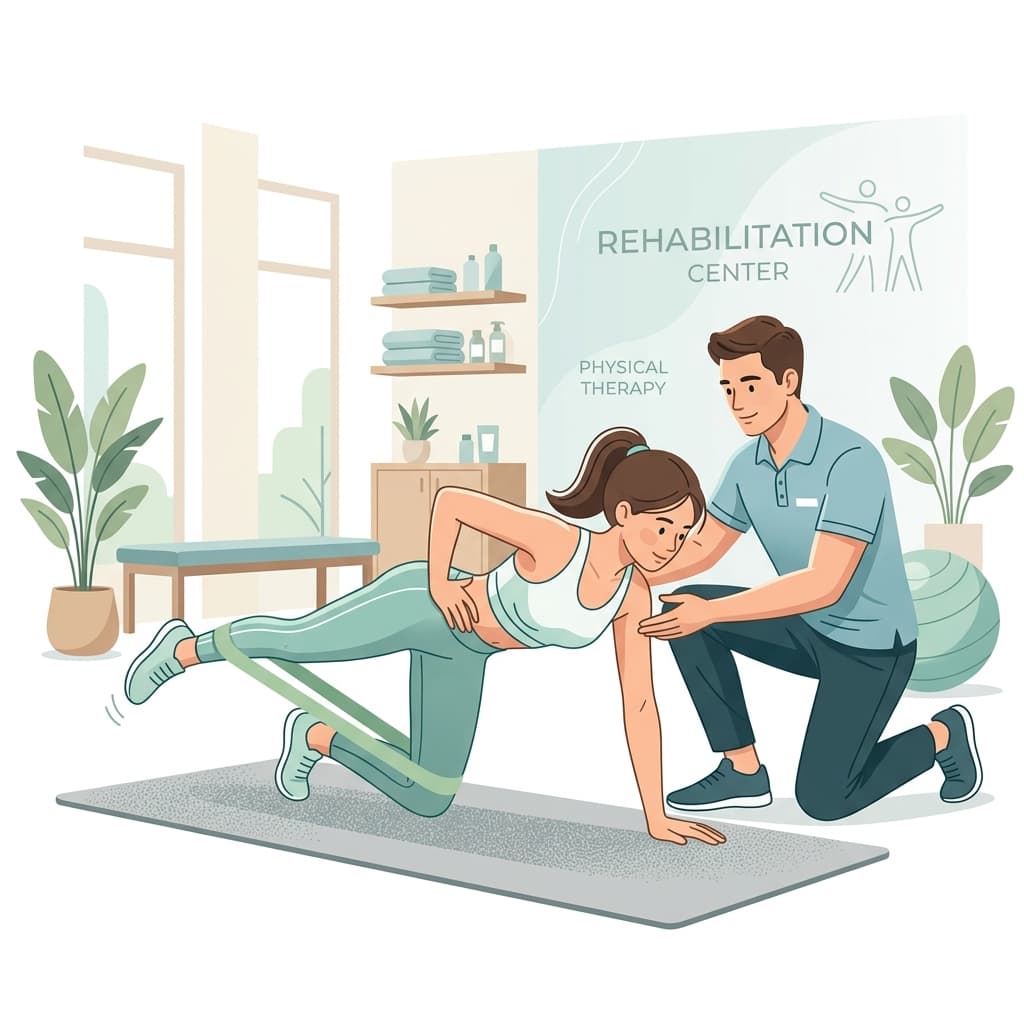
Optimal healing requires correct systemic inputs. While localized therapy prepares the structures, systemic recovery accelerates cellular repair.

Over 70% of human Growth Hormone (hGH) is secreted during deep (slow-wave) sleep. Aim for 7 to 9 hours of sleep to optimize cellular repair and structural recovery.
Prioritize high-quality protein (for amino acids to rebuild tissue), Vitamin C & Zinc (for collagen synthesis support), and anti-inflammatory healthy fats like omega-3s.
Chronic stress triggers the sympathetic nervous system ("fight or flight"), which amplifies pain sensitivity. Incorporate breathwork, mindfulness, and down-regulation to calm stress.
While self-care and load management are helpful, certain symptoms require professional clinical evaluation. Contact a physiotherapist, chiropractor, or physician immediately if you experience:
Professional support helps streamline physical healing, correct structural imbalances, and prevent chronicity.