
Comprehensive Physiotherapy Care at Our Surrey - Chimney Hill Clinic
At Revive Rehab Surrey Chimney Hill, we provide advanced, patient-centered physiotherapy services tailored to the growing communities of East and Central Surrey. Situated at 15122 72 Ave #104 near 152 Street, our clinic serves residents from Fleetwood, Sullivan Heights, Panorama Ridge, Cloverdale, East Newton, and Clayton with comprehensive physical therapy programs.
Our licensed physiotherapists evaluate your body's biomechanics as an integrated kinetic chain to identify structural imbalances causing pain, joint stiffness, or muscular restriction. We combine hands-on manual therapy, spinal mobilization, therapeutic dry needling (IMS), acoustic shockwave therapy, and personalized functional exercise retraining to accelerate your recovery.
We work in partnership with you to achieve your physical health goals, whether you are rehabilitating after orthopedic surgery, treating chronic low back pain, managing a workplace injury (WorkSafeBC claim), or recovering from a motor vehicle collision (ICBC claim). Our spacious, modern facility features private assessment suites and an expanded active rehab gym to support your movement goals.
Why Patients Choose Surrey - Chimney Hill
Looking for our other Surrey clinic?
If you live or work near North Delta, Strawberry Hill, Whalley, Kennedy Heights, or the Scott Road corridor, our Surrey Scott Road clinic is closest to you.
Conditions Treated at Surrey - Chimney Hill
Back Pain
Acute or chronic pain affecting the lumbar, thoracic, or sacral regions of the spine.
Dull aching lower back pain, sharp muscle spasms when bending, stiffness upon waking, or difficulty standing upright.
Hands-on spinal mobilization, deep core stabilization exercises, postural correction, and gentle lumbar traction relieve mechanical pressure on spinal joints and discs.
Desk workers, heavy lifting tradespeople, drivers, and anyone experiencing chronic or sudden lower back stiffness.
Neck Pain
Stiffness, soreness, or sharp discomfort in the cervical spine and surrounding shoulder musculature.
Restricted head rotation, upper back tension, radiating neck tightness, or cervicogenic headaches triggered by posture.
Cervical mobilization, upper trapezius myofascial release, posture retraining, and ergonomic guidance restore natural neck mobility.
Office employees, computer users, commuters on 72nd Avenue or 152nd Street, and individuals recovering from postural strain.
Sciatica
Irritation or compression of the sciatic nerve causing radiating pain down the buttock, thigh, and leg.
Sharp shooting leg pain, tingling or numbness in the calf or foot, burning discomfort when sitting, or weakness in the lower leg.
Nerve gliding exercises, lumbar disc decompression maneuvers, core stabilization, and targeted hip stretches relieve pressure on nerve roots.
Individuals suffering from lumbar disc herniation, piriformis syndrome, or radiating nerve pain down one or both legs.
Shoulder Pain
Pain or mobility restriction in the shoulder girdle affecting overhead movement, lifting, or sleeping.
Achiness when reaching overhead, sharp pain when dressing, weakness when carrying objects, or night discomfort when lying on the shoulder.
Glenohumeral joint mobilizations, scapular stabilization, rotator cuff strengthening, and soft-tissue release restore joint mechanics.
Overhead athletes, painters, swimmers, desk workers, and individuals experiencing shoulder impingement or frozen shoulder.
Rotator Cuff Injuries
Strains, tendinopathy, or partial tears in the stabilizing muscle group of the shoulder joint.
Deep shoulder pain, painful arc during arm elevation, difficulty reaching behind the back, and diminished shoulder strength.
Graduated eccentric resistance exercises, shockwave therapy, joint mobilizations, and inflammation control accelerate tissue healing.
Active adults, tennis players, tradespeople, and seniors dealing with wear-and-tear rotator cuff tendinopathy.
Knee Pain
Discomfort or structural instability in the knee joint stemming from cartilage strain, patellofemoral tracking, or ligament irritation.
Pain when climbing stairs, swelling after walking, clicking or popping during knee bends, or stiffness after prolonged sitting.
Patellar tracking correction, quadriceps and hamstring strengthening, gait retraining, and hip control exercises improve knee alignment.
Runners, hikers, gardeners, seniors with knee osteoarthritis, and active individuals experiencing knee discomfort.
ACL Rehabilitation
Comprehensive pre-operative and post-operative physical rehabilitation for anterior cruciate ligament injuries and reconstructions.
Knee instability, severe swelling after sports pivot, loss of full knee extension or flexion, and quad muscle inhibition.
Structured phased rehab focusing on quad reactivation, proprioceptive balance training, agility drills, and progressive return-to-sport testing.
Soccer, basketball, skiing, and rugby athletes recovering from partial ACL tears or surgical reconstruction.
Sports Injuries
Acute or overuse soft-tissue and joint injuries sustained during athletic conditioning, training, or competitive sports.
Muscle pulls, joint sprains, localized bruising, swelling, sharp pain during athletic movement, or performance decline.
Active tissue release, dry needling, joint mobilization, neuromuscular re-education, and sports-specific functional retraining speed up recovery.
Amateur and competitive athletes, weekend warriors, runners, and fitness enthusiasts aiming for safe return to play.
Whiplash
Cervical acceleration-deceleration injury caused by sudden force, common in motor vehicle collisions.
Neck stiffness, upper back soreness, headaches at the base of the skull, dizziness, fatigue, or jaw tension following a crash.
Gentle cervical mobilization, tissue calming, postural re-education, deep neck flexor strengthening, and gradual range of motion restoration.
Drivers and passengers recovering from rear-end or side-impact motor vehicle collisions under ICBC claims.
ICBC Injuries
Complex musculoskeletal trauma, spinal sprains, and soft-tissue injuries resulting from motor vehicle collisions in BC.
Multi-site body aches, neck whiplash, lower back strain, shoulder discomfort, anxiety driving, or concussion symptoms.
Early active rehabilitation, manual therapy, dry needling, active kinesiology gym programs, and direct-billed insurance coordination.
Anyone involved in an auto crash in British Columbia with an active ICBC claim seeking pre-approved care.
Concussions
Mild traumatic brain injury caused by a head impact or violent shaking of the neck and head.
Brain fog, light and sound sensitivity, headaches, dizziness, difficulty concentrating, nausea, or visual fatigue.
Vestibular rehabilitation, oculomotor visual training, neck muscle treatment, and gradual physical exertion protocols restore brain function.
Athletes, crash victims, or individuals who suffered a head strike or severe whiplash event.
Vertigo & Dizziness
Balance disorders, benign paroxysmal positional vertigo (BPPV), or inner ear vestibular dysfunction causing spinning sensations.
Sudden room spinning when turning in bed, feeling unsteadiness when walking, motion sensitivity, or lightheadedness.
Epley maneuver canalith repositioning, gaze stabilization exercises, habituation retraining, and balance conditioning eliminate vertigo.
Individuals suffering from BPPV inner ear crystals, vestibular neuritis, or balance unsteadiness.
TMJ Disorders
Musculoskeletal dysfunction, tightness, or pain affecting the temporomandibular joint and jaw chewing muscles.
Jaw clicking or popping, difficulty chewing, facial muscle tightness, earaches, lockjaw, or frequent temporal headaches.
Intra-oral and extra-oral myofascial release, cervical spine mobilization, jaw alignment exercises, and stress tension management.
Individuals who clench or grind teeth, experience jaw clicking, or suffer from TMJ-related headaches.
Pelvic Floor Dysfunction
Tightness, weakness, or incoordination of the pelvic basin muscles supporting the bladder, bowel, and pelvic organs.
Stress urinary incontinence when coughing or jumping, pelvic organ heaviness, tailbone pain, or painful intercourse.
Pelvic muscle biofeedback, gentle internal/external muscle release, core stabilization, and bladder retraining improve pelvic health.
Prenatal and postpartum mothers, individuals experiencing bladder leakage, or patients with chronic pelvic discomfort.
Arthritis
Inflammation or degenerative wear of cartilage in joints such as hips, knees, hands, or spinal facet joints.
Morning joint stiffness lasting over 30 minutes, swelling around joints, deep achiness during weather changes, or decreased range of motion.
Gentle joint mobilizations, low-impact hydrotherapy guidance, muscular strengthening, gait correction, and joint protection education.
Seniors, active adults managing osteoarthritis or rheumatoid arthritis, and individuals seeking to avoid joint replacement surgery.
Post-Surgical Rehabilitation
Specialized physical therapy following orthopedic surgeries such as hip/knee replacements, rotator cuff repair, or spinal fusion.
Post-operative swelling, surgical scar tissue tightness, muscle weakness, reduced joint range of motion, and altered walking gait.
Scar tissue mobilization, gradual passive-to-active movement, swelling control, quad/glute reactivation, and progressive strength recovery.
Patients recovering from joint replacements, ACL repair, arthroscopy, fracture hardware fixation, or spinal surgery.
Running Injuries
Overuse lower extremity injuries common in runners, such as shin splints, Achilles tendinopathy, and runner’s knee.
Pain along the shin bone, Achilles tendon tightness during morning steps, outer knee pain (IT band), or heel pain.
Video gait analysis, foot strike assessment, calf and hip loading programs, shockwave therapy, and gradual running return plans.
Marathon runners, sprinters, jogger enthusiasts, and athletes preparing for race events.
Chronic Pain
Persistent musculoskeletal pain lasting longer than 3 months, often accompanied by nervous system sensitization.
Widespread body soreness, fatigue, persistent stiffness, fear of physical movement, or flare-ups with daily exertion.
Pain neuroscience education, gradual pacing, gentle movement exposure, IMS dry needling, and restorative exercise rebuild confidence.
Patients living with fibromyalgia, chronic lower back pain, persistent post-injury soreness, or complex pain conditions.
Meet Our Local Physiotherapy Specialists
Our certified and registered professionals at Surrey - Chimney Hill are here to help you achieve your recovery goals.
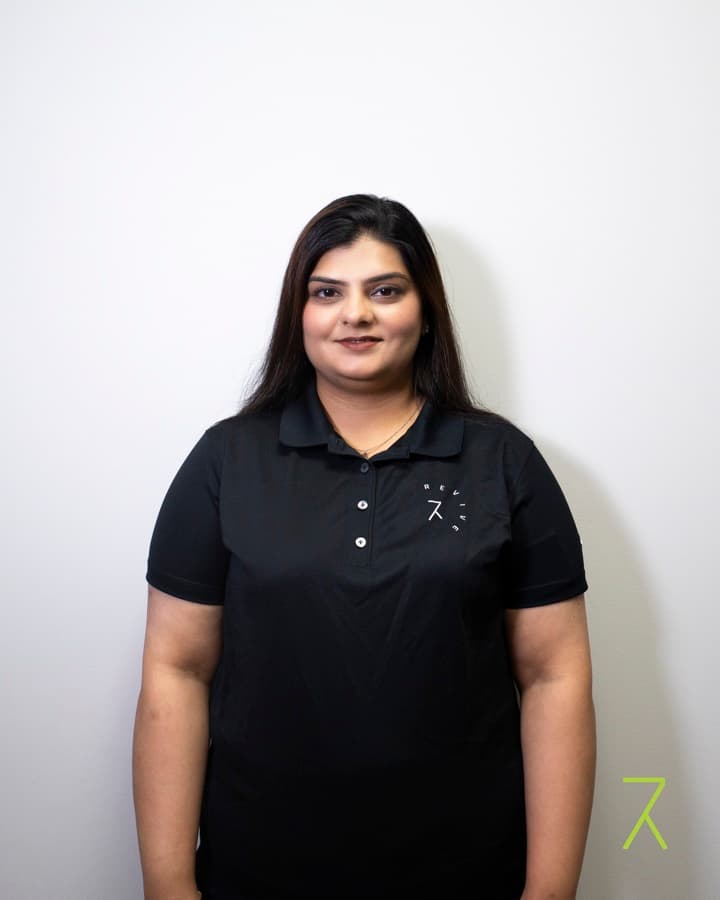
Harpriya Luther
Registered Physiotherapist
Harpriya is a Physiotherapist who completed her Bachelor of Physiotherapy at Guru Nanak Dev University (GNDU) in 2015. Her clinical experience spans a broad age range, from young children to older adults, giving her experience adapting rehabilitation to different stages of life and levels of physical ability. She has pursued additional training and holds certifications in dry needling, cupping therapy, K-Taping, shockwave therapy, vestibular rehabilitation, female pelvic health, and the McKenzie Method for spinal conditions. Harpriya combines hands-on techniques with exercise-based rehabilitation and education. She begins by assessing how a patient's symptoms are affecting their movement and daily activities and then builds treatment around the findings of that assessment, with a particular interest in helping patients understand their condition rather than simply treating symptoms. Harpriya continues to pursue professional education and broaden her clinical skills so she can offer patients a range of treatment options appropriate to their condition and recovery goals. Outside of work, she enjoys travelling, experiencing different cultures, and spending time with family and friends. She is fluent in English, Punjabi, and Hindi.
Kanika Gandhi
Registered Physiotherapist
Kanika brings over 12 years of physiotherapy experience, with a strong clinical background in musculoskeletal injuries, workplace injuries, and injuries related to motor vehicle accidents. She holds a Bachelor's degree in Physiotherapy and a Master's degree in Sports Physiotherapy. Her advanced training also includes certification in Intramuscular Stimulation (IMS), along with specialized training in concussion management and vestibular rehabilitation. Kanika's sports physiotherapy background has shaped an approach that focuses on restoring movement and function while addressing the factors that may contribute to recurring symptoms or difficulty returning to activity, with treatment adapted according to the patient's condition, physical demands, and stage of recovery. Her experience with concussion and vestibular conditions also allows her to work with patients experiencing dizziness, balance difficulties, and other challenges that can occur following injury. Kanika's objective is to provide focused, practical rehabilitation that helps patients progress safely toward returning to work, sport, exercise, and everyday activities.
What to Expect During Your Appointment
Stage 1: Detailed Clinical Assessment
Initial Evaluation at Surrey - Chimney Hill (Session 1)
Your appointment begins with a thorough consultation reviewing health history, joint range of motion, muscle strength, and movement mechanics. You receive a clear diagnosis and begin hands-on treatment on day one.
Stage 2: Symptom Relief & Targeted Manual Care
Restoring Initial Comfort & Mobility
Using localized hands-on joint mobilizations, deep tissue release, or specialized modalities, your practitioner works to calm acute inflamed tissue, reduce muscle guarding, and restore initial joint range.
Stage 3: Guided Active Functional Retraining
Rebuilding Strength in Our Clinic Gym Space
Under direct professional supervision, you progress through targeted exercise programs in our equipped active movement space to strengthen stabilizing muscles and restore movement confidence.
Stage 4: Discharge Planning & Independent Self-Management
Long-Term Resilience & Prevention
Before completing formal care, your therapist provides customized home exercise plans and practical workstation ergonomic strategies so you maintain lasting physical independence.
Insurance & Direct Billing at Surrey - Chimney Hill
At Revive Rehab Surrey - Chimney Hill, we make payment and insurance coverage completely transparent. We provide direct electronic billing for extended health benefit providers (Pacific Blue Cross, Sun Life, Canada Life, Manulife). For patients recovering from vehicle crashes on local roads like 72 Avenue, 152 Street, Fraser Highway, and 64 Avenue, ICBC pre-approves care with zero out-of-pocket stress. Our front desk handles all paperwork directly.
Frequently Asked Questions
The number of sessions depends on your specific condition, injury severity, and physical goals. Minor muscle strains may resolve in 4 to 6 sessions, while post-surgical rehabilitation, ICBC crash recovery, or chronic spinal conditions may require 8 to 16 sessions over 6 to 12 weeks. Your physiotherapist will outline a clear treatment plan during your initial visit.
No physician referral is required to book a physiotherapy assessment in British Columbia. Physiotherapists are primary healthcare providers. However, some private extended health insurance plans may require a doctor’s note for direct reimbursement — check with your insurer prior to your visit.
Yes. Physiotherapy is one of the most effective non-invasive treatments for chronic pain. We combine hands-on manual therapy, IMS dry needling, pain neuroscience education, and progressive movement pacing to calm overactive nerve signals and restore functional strength without relying solely on medication.
Yes. Physiotherapy is covered by almost all Canadian extended health benefits plans. At Revive Rehab Surrey Chimney Hill, we offer direct electronic billing for major providers including Pacific Blue Cross, Sun Life, Canada Life, Manulife, Desjardins, and Green Shield.
Yes. ICBC pre-approves 25 physiotherapy sessions within the first 12 weeks following a motor vehicle collision. We bill ICBC directly, meaning eligible crash victims pay zero out-of-pocket fees for their physical rehabilitation visits.
Your first visit lasts 45 to 60 minutes and includes a detailed discussion of your health history, a physical movement assessment (testing joint mobility, strength, and posture), a clear diagnosis, and your initial hands-on treatment and home exercise program.
Yes. Our clinic provides specialized vestibular rehabilitation. For Benign Paroxysmal Positional Vertigo (BPPV), maneuvers such as the Epley maneuver can reposition inner ear crystals and resolve spinning dizziness in as few as 1 to 3 visits.
Yes. Physiotherapy decreases arthritic pain by strengthening surrounding muscles, mobilizing stiff joint capsules, improving walking alignment, and providing low-impact exercise strategies to reduce stress on worn cartilage.
For acute injuries or car crashes, starting gentle physiotherapy within 24 to 72 hours helps control inflammation, prevent scar tissue stiffness, and accelerate healing. Early intervention reduces the risk of acute injuries becoming chronic.
Initial assessments are typically 45 to 60 minutes long to allow for a thorough evaluation and initial treatment. Follow-up sessions are usually 30 to 45 minutes of dedicated one-on-one care.
Yes. If you were injured at work in BC, WorkSafeBC covers approved physiotherapy treatment. We bill WorkSafeBC directly once your claim number is generated, providing seamless rehabilitation for your return to work.
Yes. Specialized jaw physiotherapy incorporates intra-oral and extra-oral soft-tissue release, cervical spine alignment, and jaw coordination exercises to relieve TMJ clicking, facial tightness, and temporal headaches.
Yes. Our certified pelvic health physiotherapists provide private, confidential assessments and treatments for bladder incontinence, pelvic pain, prenatal conditioning, and postpartum recovery in dedicated private treatment rooms.
Wear comfortable, loose-fitting clothing that allows easy access to the injured area — such as shorts for knee or leg issues, or a tank top for shoulder and neck evaluations.
Yes, when clinically indicated and with your consent, certified physiotherapists can incorporate Intramuscular Stimulation (IMS) or dry needling into your treatment session to release deep muscle knots and reset nerve firing.
Post-surgical rehab prevents scar tissue adherence, restores joint range of motion safely according to your surgeon’s protocols, prevents muscle atrophy, and guides your safe return to driving, work, and sports.
We require 24 hours’ notice for cancellations or rescheduling so that we can offer open appointment slots to other patients in need of care. Late cancellations or missed visits may be subject to a fee.
Yes. As a multidisciplinary clinic, our physiotherapists, chiropractors, and registered massage therapists (RMTs) work collaboratively under one roof. Combining manual therapies speeds up overall musculoskeletal recovery.